PROJECT
Interactive design solution to enhance bouldering technique for novices
ROLE/ UX Designer
ROLE/
UX Designer
TIMELINE/
5 weeks
COLLABORATION/
Team of four
BACKGROUND
The challenge was to create a solution to enhance the experience of bouldering and make it more accessible through interaction design.
SOLUTION
An interactive system helping novices improve their technique taking into account their different body skills and by being more aware of their bodies.

RESEARCH
We began the project by observing and conducting interviews with members at the climbing gym. We interviewed a variety of individuals for the project, including expert climbers, beginners, and coaches, to gather a range of viewpoints and achieve a thorough understanding.
We also did bodystorming and equipment exploration while trying out climbing ourselves.

INSIGHTS
From fieldwork he data from the fieldwork were analyzed and summarized.
Key insights:
1. Novice users are not aware of their skills and physical features to climb more efficiently
2. Novices don’t have as much mind-body connection as pros
3. Climbers don’t want to get the ‘route’ solved
4. Novices often rely on their arm strength
5. Novices don’t have as much mind-body connection as pros
Design challege: How might we use mindfulness to close the technique gap between beginner and advanced level by bringing awareness to body, taking into account their particular skills and physical features?
We created 5 criterias in order to help us to narrow down our ideas, the criterias were based on the brief and our research question
The solution should...
With the criterias, we were able to create a synthesis of ideas: A system that enhances awareness of body movements to properly complete a climbing route.
DESIGN CRITERIAS
1
5
3
2
4
relate to using
mind and body
improve accessibility
be testable
benefit from social aspect
improve climbing


WORKSHOP 1
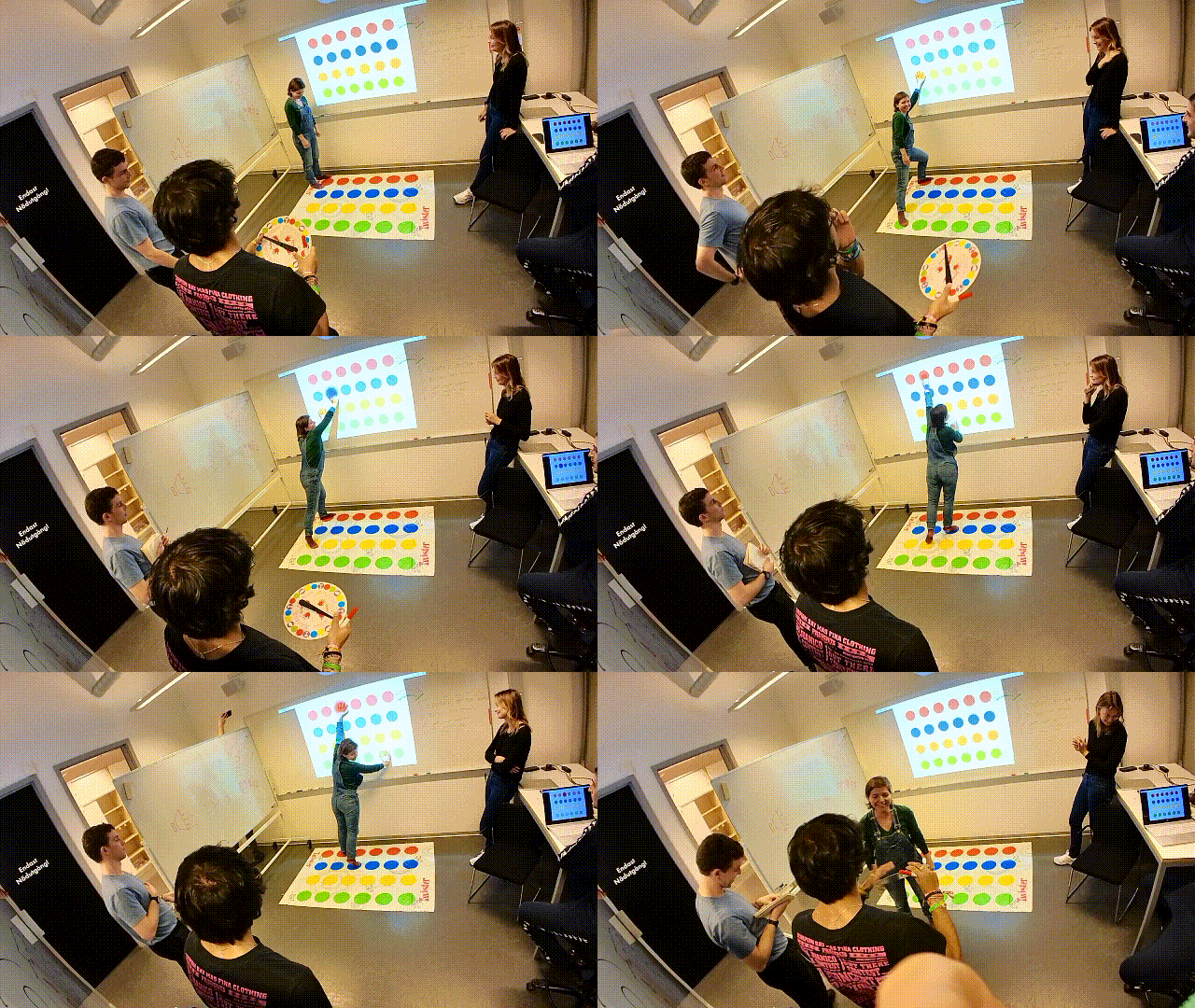
The workshop focused on experimenting with various feedforward methods to enhance body awareness in novice climbers.
Participants engaged in both classic and interactive Twister games, while we tested different types of feedback, including light, haptic, and sound-based advice.
Insights from the tests indicated that haptic feedback was the most effective and user-friendly method for promoting body awareness during climbing.

WORKSHOP 2
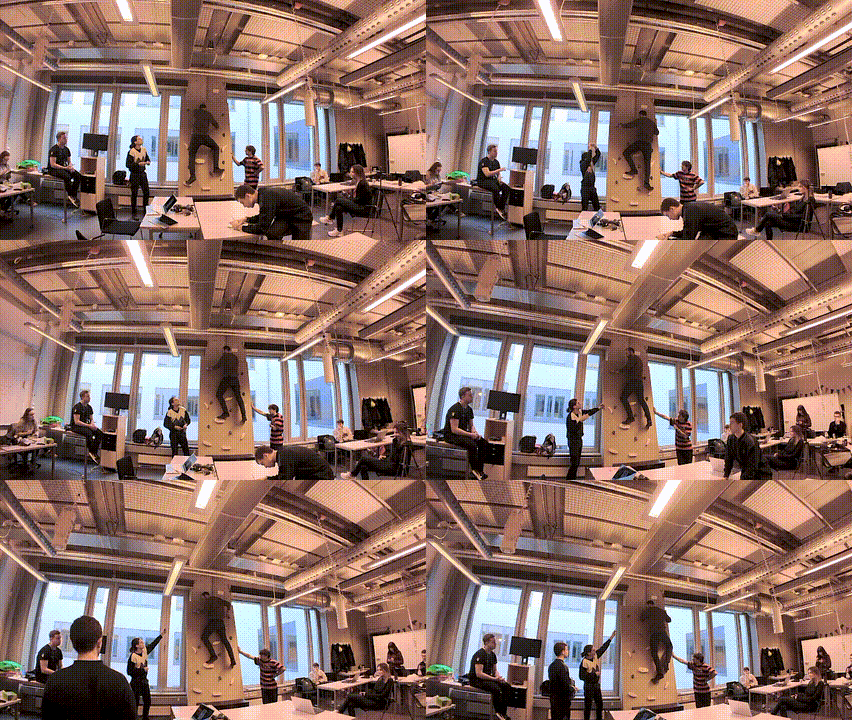
The aim was to assess various haptic feedback methods to determine the most comprehensible for users and to gather feedback for the application.
Activities:
-
Test the application
-
Test the wearable prototype while climbing
-
Group interview
Insights from this workshop indicated that using different vibrations for each piece of advice made it too challenging for users to distinguish.
→ One vibration to be a “call of attention”
→ The vibration should be placed in the given advice area.
DESIGN CONCEPT
Final Concept: An interactive system designed to assist novice climbers in enhancing their technique by considering their individual body skills and promoting greater body awareness.

App that collects data from the climbit
AI + ML engine analyses and processers climits's performance
Climbit: An embodied device that guides the climber trough haptic signal


1. Log in/ sign up
2. Fil in information
3. Put Climbits
4. Vibe check


5. Set camera
6. User climbs
7. User reacts
8. Save progress
USER JOURNEY
APPLICATION
Skriv din rubrik här

Här kan du skriva sådant som kan vara bra för läsaren att veta. Klicka på "Redigera text" eller dubbelklicka för att göra dina ändringar.
Fil in information
— Level of experience
— Enter height
— Enter weight
— Add strongest/weakest body part
Set up
— Attach the Climbits
— Vibe check
— Set up the phone
— Begin climb
Skriv din rubrik här

Här kan du skriva sådant som kan vara bra för läsaren att veta. Klicka på "Redigera text" eller dubbelklicka för att göra dina ändringar.
What I learned
Through this project, I learned how to design and sketch for the embodied body, with a particular focus on haptic feedback. It gave me valuable insights into how sensory interactions, especially through touch, can enhance body awareness and improve user experience in physical activities.
EXHIBITION


